Proof and Blockchain

Proov-it! guarantees total file integrity, precise timestamping and geolocation, with legal recognition across the European Union, providing evidence admissible in court.

In compliance with the European eIDAS Regulation, electronic timestamping ensures the legal validity of evidence throughout the EU. Each submission is accurately timestamped, proving the existence of a file at a specific moment in time. This process is not only compliant, but also legally admissible.

Understanding How Blockchain Works

What is the legal value of evidence stored on the blockchain?

How does the Blockchain ensure the reliability and security of your evidence?

Why is anchoring on the blockchain reliable and secure?

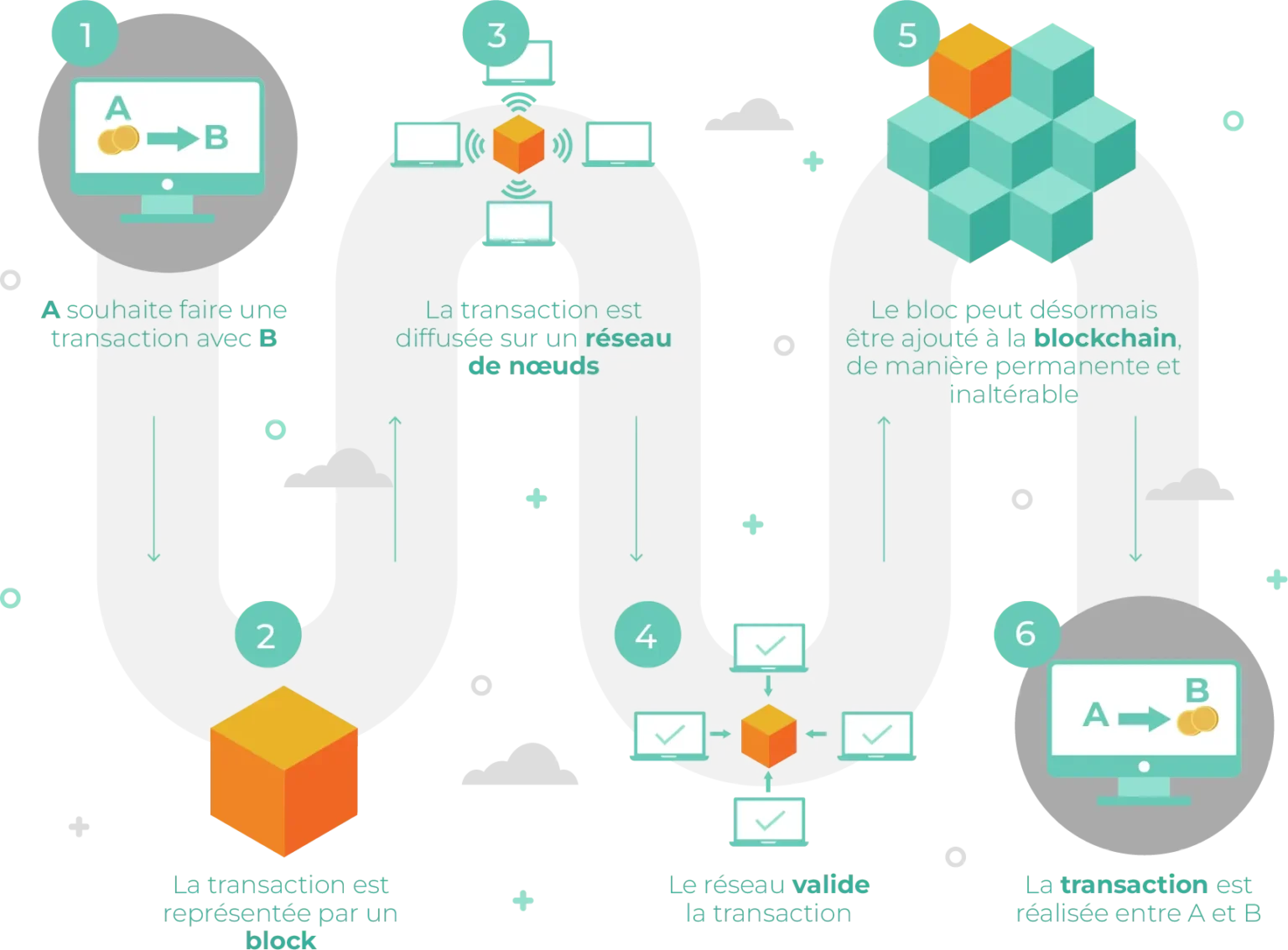
The blockchain is a distributed and secure ledger technology that records transactions in a transparent, immutable, and decentralized manner, without the need for a trusted intermediary.

Understanding the Blockchain

To understand blockchain, imagine a secure, decentralized digital ledger where information is recorded in the form of “blocks” connected in chronological order, forming a “chain” of data.

Each block in a blockchain contains verifiable information—such as transactions, contracts, documents, or other data—that is stored permanently and immutably. The key element of blockchain is its decentralization: instead of being stored on a single centralized server, the blockchain is distributed across a global network of computer nodes, making it extremely resistant to censorship and tampering.

In the European Union, the validity of blockchain-anchored evidence is based on fundamental legal principles that recognize their reliability and integrity as electronic evidence, particularly when they comply with the standards of qualified trust services.

Blockchain Evidence: What Is Its Legal Value?

In the legal systems of European Union countries, the recognition of blockchain-anchored evidence is based on fundamental legal principles.

First, the validity of evidence depends on its ability to credibly demonstrate a fact or event. European laws increasingly recognize the probative value of electronic documents, provided certain conditions are met.

Blockchain, as a decentralized and secure ledger, offers significant advantages in terms of data reliability and integrity. Anchoring a file on the blockchain creates a unique, immutable, and timestamped digital fingerprint, certifying its existence at a specific moment in time.

Legally, this digital fingerprint may be considered a form of electronic evidence, provided it is reliable and has maintained its integrity. European courts are beginning to recognize the evidential value of such proof, especially when it is generated using qualified trust services that comply with relevant legal and technical standards.

Therefore, when files are anchored on the blockchain using qualified trust services, they may be considered reliable and credible electronic evidence, usable in legal proceedings and other official transactions.

Blockchain offers an innovative solution to ensure the reliability and security of digital evidence by anchoring unique and immutable file fingerprints, thereby guaranteeing their integrity and authenticity.

How does Blockchain ensure the reliability and security of your evidence?

In our constantly evolving digital world, the reliability and security of evidence is more crucial than ever.

Whether it’s to verify the authenticity of a document or to prove a fact in a dispute, it is essential to have reliable and secure methods to ensure the integrity of information.

Blockchain technology has become an increasingly popular solution to meet these needs, offering an innovative and effective way to anchor files securely and immutably.

Anchoring on the blockchain involves recording a unique digital fingerprint of a file into a block of data on the blockchain.

This digital fingerprint, also known as a “hash”, is generated from the file’s content and is unique to that specific file.

Once the file’s hash is recorded on the blockchain, it becomes immutable and impossible to alter without also modifying the entire chain of blocks — something that is extremely difficult, if not practically impossible, to achieve.

Anchoring on the blockchain is a reliable and secure process for proving a fact, offering a transparent and immutable solution to ensure the integrity of information in our constantly evolving digital world.

Why is anchoring on the blockchain reliable and secure?

1.

Immutability

Once recorded on the blockchain, a file hash is immutable and cannot be altered without detection.

2.

Decentralization

The blockchain is decentralized, meaning it is not controlled by a single entity. This makes data manipulation extremely difficult, as altering a transaction would require modifying the majority of the network’s nodes.

3.

Cryptography

Blockchain security relies on robust cryptographic algorithms, making the data virtually impossible to hack or falsify.

Télécharger l'application

L’application est à présent disponible sur Google Play et Apple Store