Legal guide
Can a photo be used as evidence?
In most cases it can be submitted. Its weight, however, depends on what it establishes: when it was taken, where, and whether it has been altered. This guide explains what EU law says and how to make a photo harder to challenge.
By Emmanuel Fernandez, CEO of Proov-It · Updated
Across the EU, the eIDAS Regulation provides that an electronic timestamp cannot be denied legal effect or admissibility as evidence solely because it is electronic or not qualified (Article 41). Beyond that, each country has its own rules of evidence. In France, where Proov-It is based, evidence may be brought by any means unless the law requires a specific form of proof (Article 1358 of the French Civil Code). A timestamped photo as evidence is then assessed by the court.
The weakness of an ordinary photo is rarely admissibility; it is fragility. Its date can be changed in the metadata, the image can be edited, and nothing proves where it was taken. The other side only has to challenge these points to weaken it. The more a photo establishes its date, place and integrity, the less room there is for argument.
That is what a timestamp does: it fixes the file's fingerprint at a given date. Proov-It adds blockchain anchoring and the geolocation recorded at capture. We certify the date, place and integrity, not the truth of what the photo shows: the court assesses its weight.
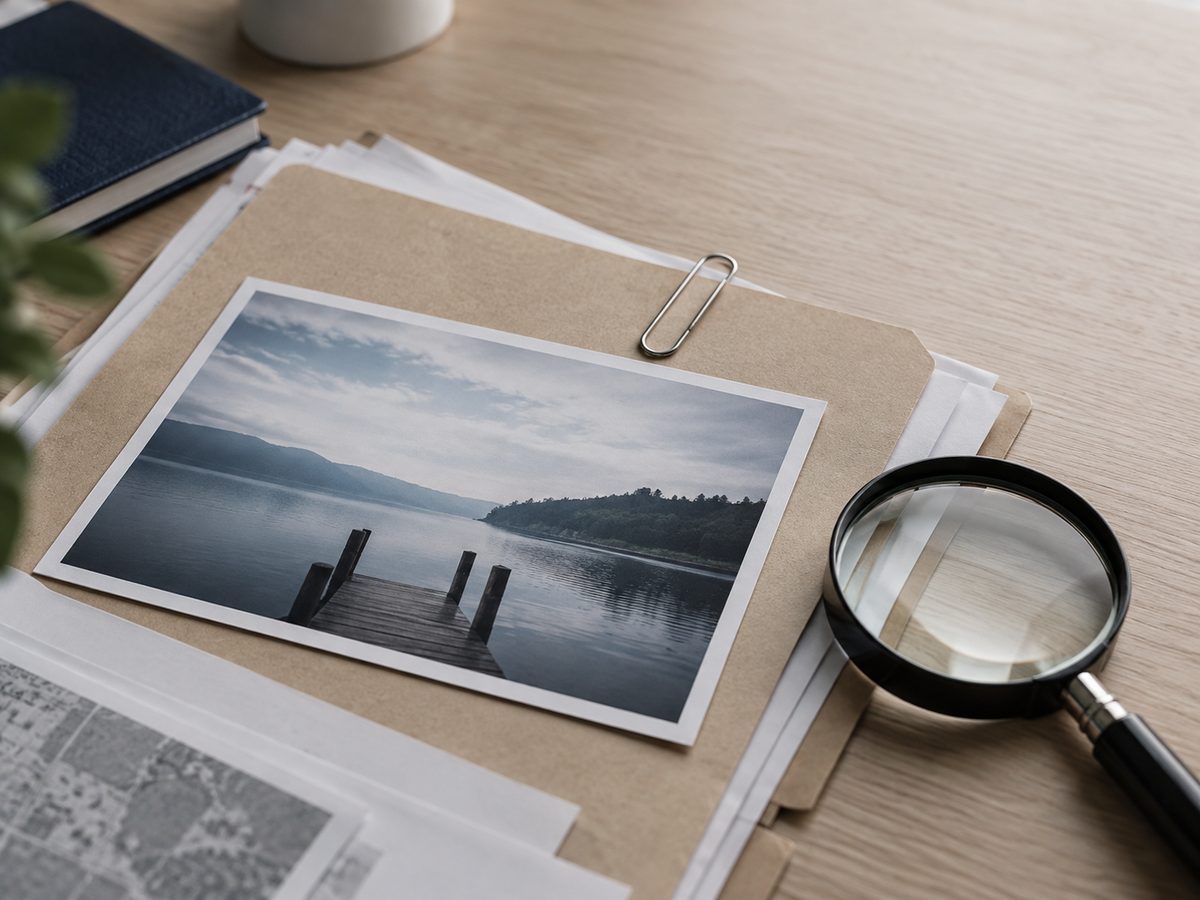
Ordinary photo, timestamped photo, official report: compared
| Ordinary photo | Proov-It timestamped photo | Report by a public officer | |
|---|---|---|---|
| Date | The metadata date, which can be changed | Anchoring date, timestamped and written to a blockchain | Date of the report, set by a public officer |
| Integrity | Nothing shows the image has not been edited | SHA-256 fingerprint anyone can check: any edit is detected | The officer describes what they observe |
| Place | Not established | Geolocation recorded at capture in the mobile app | Where the officer makes the observation |
| In court | Can usually be submitted; date and integrity easy to challenge | Cannot be refused solely because the timestamp is not qualified (eIDAS, Art. 41); the court assesses it | Stronger evidence, often requested once a dispute has arisen |
| Cost | None | Under €2 per submission for individuals, a few tens of cents on a business plan | Charged per report, more expensive |
| Speed | Immediate | Immediate, from a smartphone | On site or online, by appointment |
Checklist
Taking a photo that will stand up as evidence.
A few habits make a photo much harder to challenge.
Wide shot, then details
An overview places the detail: without it, a close-up does not show where it was taken.
A sense of scale
A tape measure or a familiar object next to the defect avoids arguments about its size.
Capture in the app
Taken in Proov-It, the photo is dated, geolocated and fixed from the moment of capture.
Submit without delay
The closer the submission is to the facts, the less room for argument about the date.
No edits beforehand
No cropping or filters before submitting: the version submitted should be the one from the device.
Keep the context
A precise comment and the relevant documents (quotes, messages, inventory) in the same submission.
The limits
What a photo can prove, and what it cannot.
What a photo can show
- +The visible condition of a property, place or object when the photo was taken.
- +The presence of a defect, damage or completed work.
- +With a timestamp, that the file existed on a date and is unchanged since.
- +With in-app capture, the geolocation recorded at capture.
What it cannot prove on its own
- −What lies outside the frame, or what happened before or after the shot.
- −The cause of damage or anyone's liability.
- −That the scene is genuine: an authentic photo can show a staged situation.
- −Its own weight: the court assesses it in light of the whole file.
Use cases
Photos as evidence: common situations.
Condition of a property
Move-in, move-out, damage: dated photos to discuss the deposit on the basis of evidence.
Building work and defects
The condition before, during and after the work, to establish when a defect appeared.
Water damage and other losses
Damage recorded before repairs, to pass on to the insurer or the loss adjuster.
Neighbour disputes
Nuisance, encroachment, damage: a series of dated photos rather than a memory.
Deliveries and purchases
The condition of a parcel or item on receipt, before any exchange with the seller.
Creations and prior existence
A drawing, a mock-up or a prototype photographed on a given date.
How it works
A proof in three steps.
No jargon, no technical skills. You submit or you capture, we certify.
Choose or capture
Documents, photos, videos. Or take a photo or video directly in the app.
Add the context
A comment, tags, a folder. To organise your proofs and find them easily.
Submit
You receive a PDF certificate attesting to the file's existence and integrity on the anchoring date and, for a capture made in the app, the geolocation recorded at that moment.
Does it hold up in court?
A Proov-It certificate can be produced as evidence; the court assesses its weight. We attest to the anchoring date, the integrity of the file and, for a capture made in the app, the recorded geolocation, not the truth of its content.
Frequently asked questions
What we are often asked.
Is a phone photo valid evidence?
It can usually be submitted, but national rules differ, and its date and integrity are easy to challenge. The court assesses its weight together with the rest of the file.
Can a screenshot be used as evidence?
Under the same conditions, yes. A web page frozen and timestamped at a given moment is harder to challenge than a plain screenshot, whose date and content can be changed.
Does a timestamped photo replace a bailiff's or notary's report?
No. A report drawn up by a public officer remains stronger evidence. A timestamped photo is the everyday tool for documenting things yourself, at low cost, before a dispute.
Does Proov-It prove that the photo shows the truth?
No. Proov-It certifies the anchoring date, the geolocation recorded at capture and the integrity of the file. What the photo shows is for the court or the expert to assess.
Sources and legal texts cited
Keep reading
Related pages
Timestamp comparison
Non-qualified timestamp, qualified timestamp, report by a public officer: evidential weight, cost and use of each tool, to choose for each case.
Rental condition report
Move-in and move-out condition report: photograph every room with verifiable date, place and integrity, alongside the signed inventory. First proof free.
Online proof for individuals
Neighbours, rentals, purchases, creations: prove the prior existence and integrity of any content.
Digital evidence for lawyers
Help your clients build dated evidence before litigation.
Also see: Features · How it works · Pricing · FAQ