Individuals, tradespeople, property managers
Insurance claim photos: record the damage before repairs.
After a leak: make the premises safe, stop the water, photograph and film before any remedial work, then notify your insurer within the deadline in your policy. Timestamped photos keep a record of the damage for the insurer and the loss adjuster.
By Emmanuel Fernandez, CEO of Proov-It · Updated
Damage is rarely found at a convenient moment. You have to turn off the water, protect the premises, call a tradesperson, and the original condition disappears. Yet that is exactly what the insurer and the loss adjuster will want to see. Timestamped insurance claim photos, taken before any repair, keep a dated record of it.
With Proov-It, you photograph and film the damage in the mobile app: ceiling, walls, floors, furniture, source of the leak. Each file is timestamped and geolocated, and its fingerprint is anchored on a blockchain. Up to 20 files of 100 MB per submission, or nearly 1h30 of video.
The PDF certificate can be sent to the insurer, the loss adjuster or the neighbour concerned, who can verify the integrity of the files without a Proov-It account. Proov-It does not replace your claim or the loss assessment: it documents their starting point.
Legal framework
Notification deadlines: what the rules say.
Each country sets its own rules, and your policy states the deadline that applies to you: check it first. In France, where Proov-It is based, the policyholder must notify the insurer as soon as they become aware of the loss, and at the latest within the deadline set in the policy, which cannot be shorter than 5 working days, or 2 working days for theft (Article L113-2 of the French Insurance Code). Late notification can only be held against the policyholder if the policy provides for it and the insurer proves it suffered harm as a result, and never in a case of force majeure.
For water damage in France, the official Service-Public sheet describes the joint water damage report (constat amiable « dégâts des eaux »): it records what the insurer needs, can be completed even when no other party is involved, and must also be sent to the landlord or the building manager if you rent or live in a co-owned building.
Step by step
In what order should you act?
Six steps, in this order. Photos come early, but never before your safety.
Make it safe
Switch off the power if water is near sockets or the fuse box, keep people away and do not enter a room that is unsafe.
ImmediatelyStop the water
Turn off the supply, alert the upstairs neighbour or the building manager if the leak comes from elsewhere, cover the roof if it is damaged. These protective measures limit further damage.
ImmediatelyPhotograph and film before any remedial work
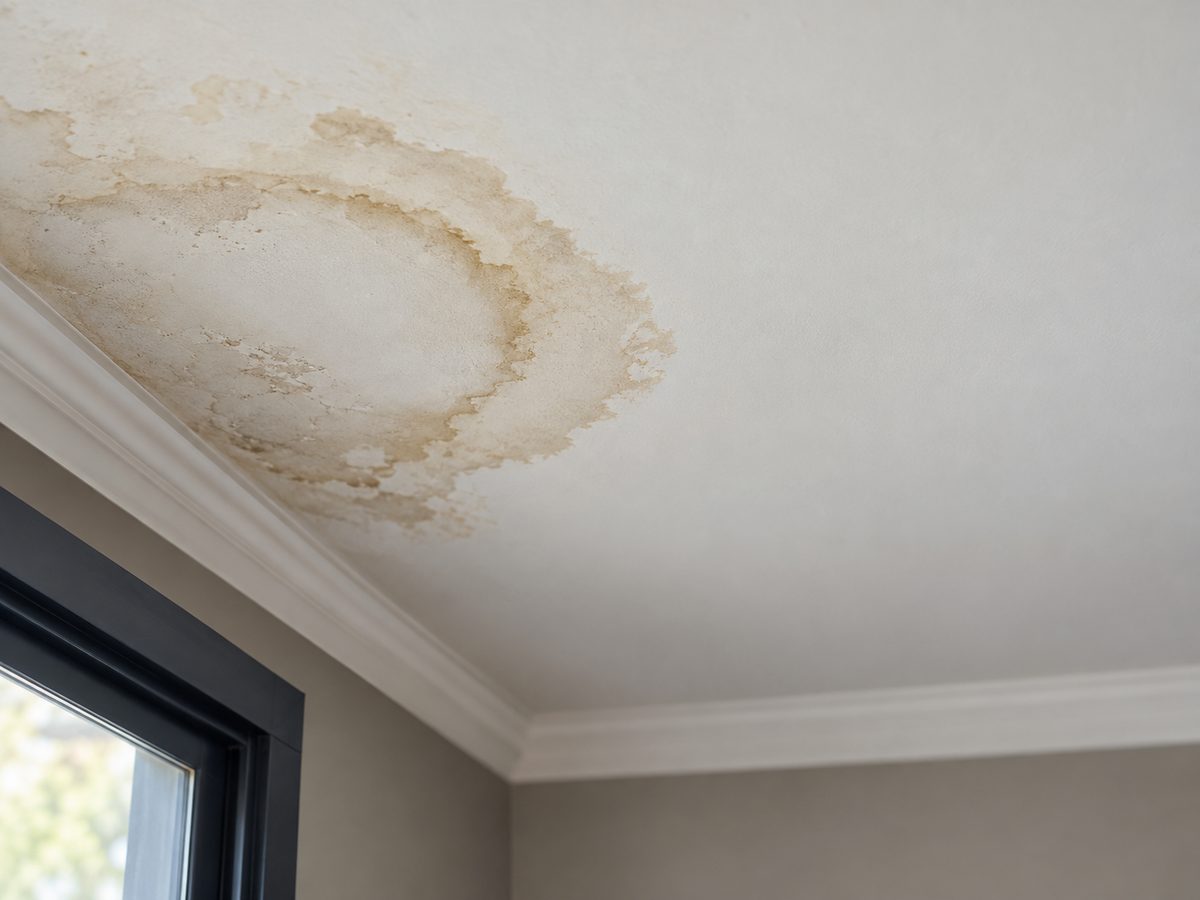
An overview of each room, then the details: ceiling, walls, floors, furniture, apparent source of the leak. A video walking round the room shows the extent of the damage better than a series of close-ups.
Before repairsKeep receipts and damaged items
Keep damaged belongings until the insurer or adjuster has seen them, unless they are a hazard, and gather invoices, warranties and statements.
Until assessedNotify within the policy deadline
As soon as possible and within the deadline in your policy. Attach your photos and supporting documents.
Policy deadlineWait for the insurer's go-ahead before permanent repairs
Emergency repairs remain possible. For permanent work, wait for the insurer's agreement or the adjuster's visit, with quotes to hand.
Before worksWhat Proov-It adds
What your certified photos establish, and what they do not.
What the certificate establishes
- +The anchoring date of each photo and video, independent of the phone's settings.
- +File integrity: the slightest edit changes the fingerprint, which the insurer or adjuster can check without a Proov-It account.
- +The geolocation recorded at capture, for a photo taken in the mobile app.
- +The sequence: one submission before repairs, another after, each with its date.
What it does not establish
- −The cause of the damage or who is liable: that is the loss assessment's job.
- −The amount of the loss.
- −Your claim to the insurer: you still have to make it, within the policy deadline.
- −The weight of the photos: the insurer, then the court in a dispute, assess it.
Use cases
Insurance claims: what you document.
Water damage
Stains, damp patches, a sagging ceiling, the source of the leak: recorded before the plumber arrives.
Fire or smoke
The damage and the items affected, filmed as soon as it is safe to enter.
Storms
Roof, fence, fallen trees: the condition found just after the event.
Emergency measures
Tarpaulins, shut-offs, props: dated proof of what was done to limit the damage.
Damage from a neighbour
The state of your home and the apparent source, to share with the neighbour or the building manager.
How it works
A proof in three steps.
No jargon, no technical skills. You submit or you capture, we certify.
Choose or capture
Documents, photos, videos. Or take a photo or video directly in the app.
Add the context
A comment, tags, a folder. To organise your proofs and find them easily.
Submit
You receive a PDF certificate attesting to the file's existence and integrity on the anchoring date and, for a capture made in the app, the geolocation recorded at that moment.
Does it hold up in court?
A Proov-It certificate can be produced as evidence; the court assesses its weight. We attest to the anchoring date, the integrity of the file and, for a capture made in the app, the recorded geolocation, not the truth of its content.
Frequently asked questions
What we are often asked.
Should I photograph water damage before repairing it?
It is advisable: once repairs are done, the original condition is gone. Take urgent measures to limit the damage first, then document before the remedial work.
Will my insurer accept timestamped photos?
Each insurer sets its own procedures. Timestamped photos are items the insurer and the adjuster take into account; they replace neither the claim nor the loss assessment.
What if there is no signal when the damage happens?
Prepare the submission offline in the mobile app (photo, video, audio); certification is completed as soon as you are back online. The date that counts is the anchoring date.
How much does a proof of damage cost?
For individuals, one token per submission, no subscription, and the first proof is free. One submission can hold up to 20 files of 100 MB.
How long do I have to report water damage?
The deadline in your policy, which depends on national law. In France it cannot be shorter than 5 working days from when you become aware of the damage (Article L113-2 of the French Insurance Code). Report as soon as possible, then add your photos and documents.
Keep reading
Related pages
Court experts and loss adjusters
Timestamped, geolocated, anchored inspection photos, with integrity the parties can check themselves.
Proof of work completed
Call-outs, maintenance, repairs: before-and-after photos and time of visit, dated and geolocated.
Rental condition report
Move-in and move-out condition report: photograph every room with verifiable date, place and integrity, alongside the signed inventory. First proof free.
Timestamped photo evidence
eIDAS Article 41, national rules of evidence, the court's assessment: what gives a photo weight as evidence, and how a timestamp makes it stronger.
Also see: Features · How it works · Pricing · FAQ